
Usable capacity vs BMS SoH: the battery underwriting gap that changes real decisions
Many battery reviews go wrong because reported State-of-Health is treated like a commercial truth. The more important question is whether the asset still supports usable energy, operating flexibility, and downside assumptions in the real world.
Commercial bridge
A method only matters if it survives the translation into real battery economics
This is the layer where technical review becomes underwriting reality: shrinking capacity and shorter operating windows change dispatch quality, reserves, and downside assumptions long before a clean-looking SoH label stops sounding reassuring.
Dataset anchor
NASA PCoE public benchmark context
Evidence reference
NASA Cycle Dispatch Context
Why it matters
- Turns state-of-health talk back into usable energy and operating flexibility.
- Improves the link between method pages and refinancing, warranty, and investor workflows.
- Gives the site a clearer bridge from public benchmark evidence to commercial battery judgment.
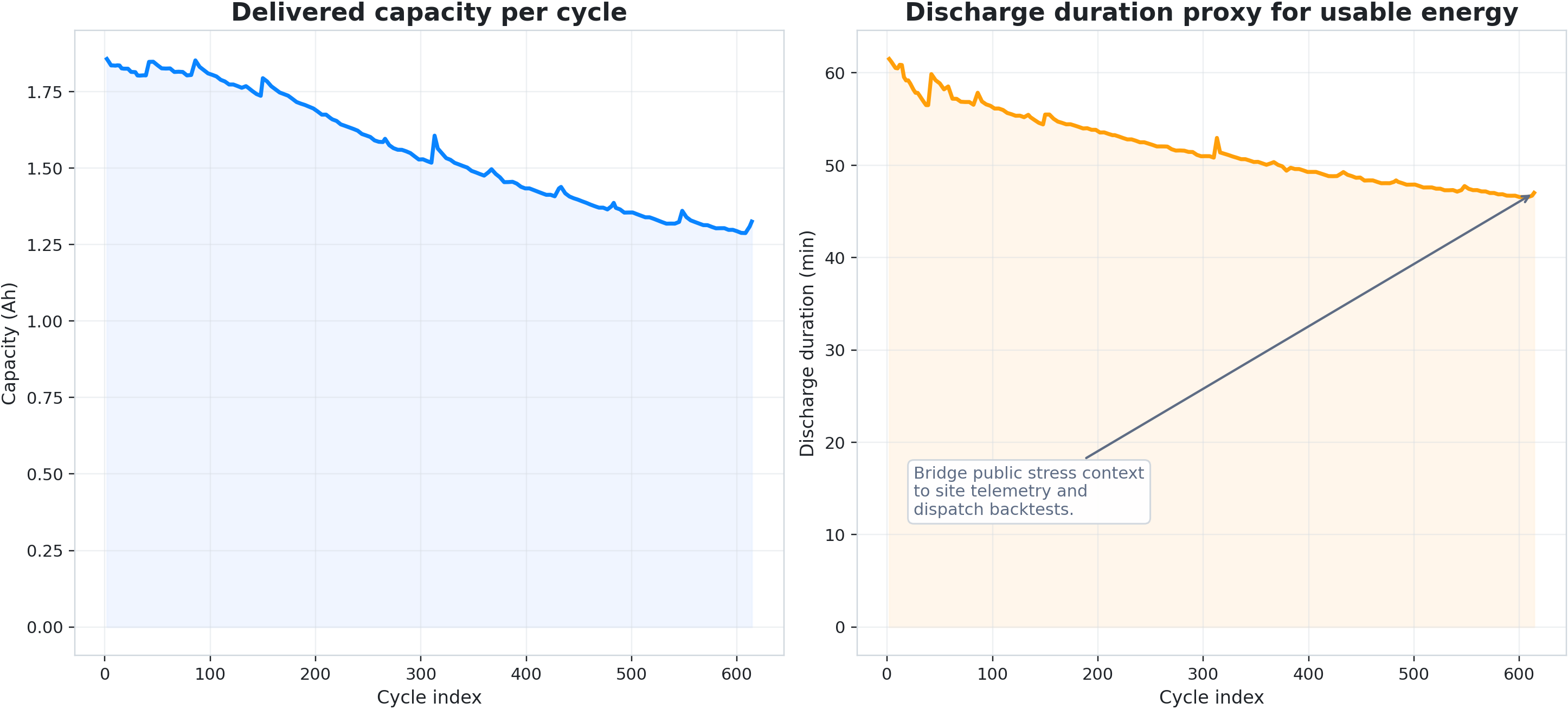
Why the distinction matters
BMS-reported SoH is useful, but it is still part of the reporting layer. Buyers, owners, and lenders usually care about a different question: how much usable battery is really there, and does that reality still support the economics or resilience story attached to the asset?
This gap matters in acquisitions, refinancing, warranty review, and post-COD checks because clean-looking SoH values can still hide operational limits, stress patterns, or degraded usable capacity that change the decision.
That is why Oxaide treats usable-capacity credibility as a commercial issue, not just an engineering curiosity.
Scope first
Defined review scope
Boundary, telemetry window, and mandate question are pinned down before conclusions move.
Encrypted handling
Protected review workflow
Review traffic and operating data are handled with encrypted transfer and controlled access.
Customer boundary
Customer-controlled deployment
Managed, private, and isolated deployment paths are available when the environment requires them.
Direct accountability
Principal sign-off
Technical accountability stays close to the method rather than disappearing into a generic workflow.