Oxaide
Claim boundary

BESS method validation: what public evidence supports today, and what still needs live review

This page gives you a clear view of what public evidence already supports, and what still needs a live asset review before a decision is made.

Why this page matters

Know what is validated publicly before you commit to a live-site decision.

You should not need to decode a full research archive just to understand the claim. This page highlights what public evidence can support today.

It also makes the next step clear: once the mandate is live, the answer comes from a scoped review of your actual asset data.

Direct public anchors

Oxford chemistry signatures, NASA anomaly and resistance context, and the telemetry-to-review decision bridge.

Strongest claim today

A coherent lithium-ion method stack, with strongest public support in LFP-first utility BESS use cases.

Not claimed publicly

Not universal chemistry proof, not multi-vendor fleet proof, and not a substitute for live telemetry, site history, and mandate-specific review.

Current public anchors

The benchmark anchors behind the method case today.

Use a focused set of references: chemistry signal, anomaly and resistance context, corroboration when ICA is fragile, and operating-context translation.

REFERENCE DATASET
OxfordICA

dQ/dV peak-shift logic.

Peak shift

Oxford / ICA

Electrochemical signature anchor

The strongest public anchor for derivative-based degradation interpretation inside the current Oxaide method set.

Dataset

Oxford Battery Degradation Dataset

Evidence reference

Oxford ICA Peak Shift

Read Oxford study
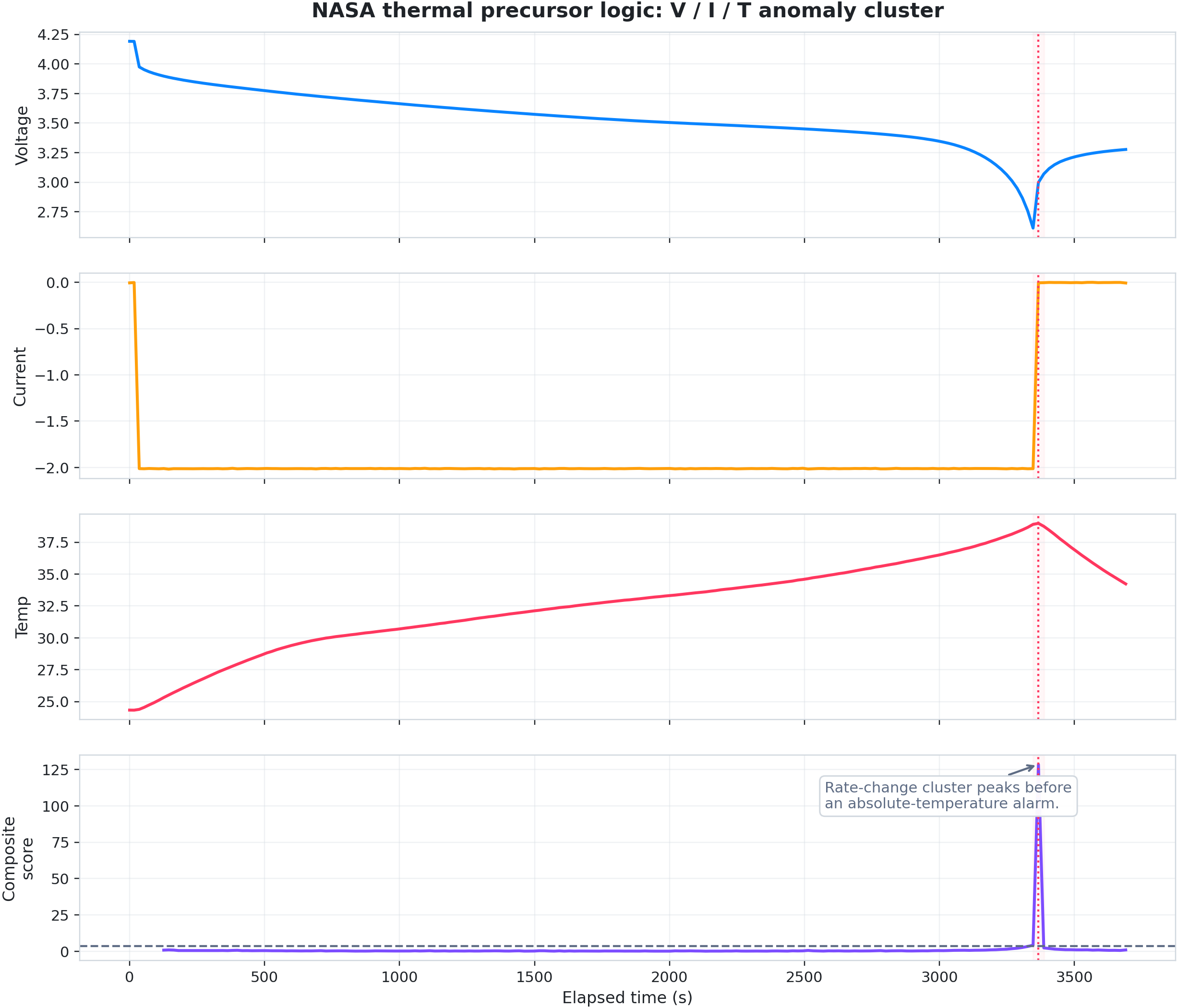
ANOMALY PRECURSOR
NASAPrecursor

Resistance and precursor logic.

Precursor sequence

NASA / anomaly

Resistance and precursor detection

The benchmark layer that supports anomaly, resistance, and early-warning interpretation before site-specific telemetry enters the room.

Dataset

NASA PCoE Battery Dataset

Evidence reference

NASA Thermal Precursor

Read NASA study
CORROBORATION LAYER
OxfordDVA

Secondary electrochemical cross-check.

DVA

Oxford / DVA

Corroboration when ICA is fragile

DVA earns its place by supporting or challenging the flagship ICA interpretation when field telemetry is noisy or undersampled.

Dataset

Oxford Battery Degradation Dataset

Evidence reference

Oxford DVA Mechanism

Review ICA and DVA logic
RESISTANCE SEQUENCE
NASAResistance

Transition and stress logic.

Resistance logic

Cycle context

Dispatch and stress regime context

Before revenue or underwriting conclusions are drawn, the operating regime has to be read properly. This is the bridge from technical trend to asset-level decision language.

Dataset

NASA PCoE public benchmark context

Evidence reference

NASA Cycle Dispatch Context

Read operating context

Proof hierarchy

How to interpret the claim, step by step.

01

Public benchmark logic

Oxford and NASA show that the core diagnostic logic is real, repeatable, and credible.

02

Disciplined claim boundary

Public evidence should support a clear, defensible claim, not a broad fleet-wide promise.

03

Live telemetry review

Asset condition is confirmed only after operating history, site telemetry, and mandate context are reviewed.

04

Commercial decision translation

Only then should findings be translated into diligence, warranty, refinancing, insurer, or post-COD decisions.

Representative figures

A few strong figures are enough to establish the case.

Use these visuals to understand the argument quickly, then open the atlas only when deeper chart review is required.

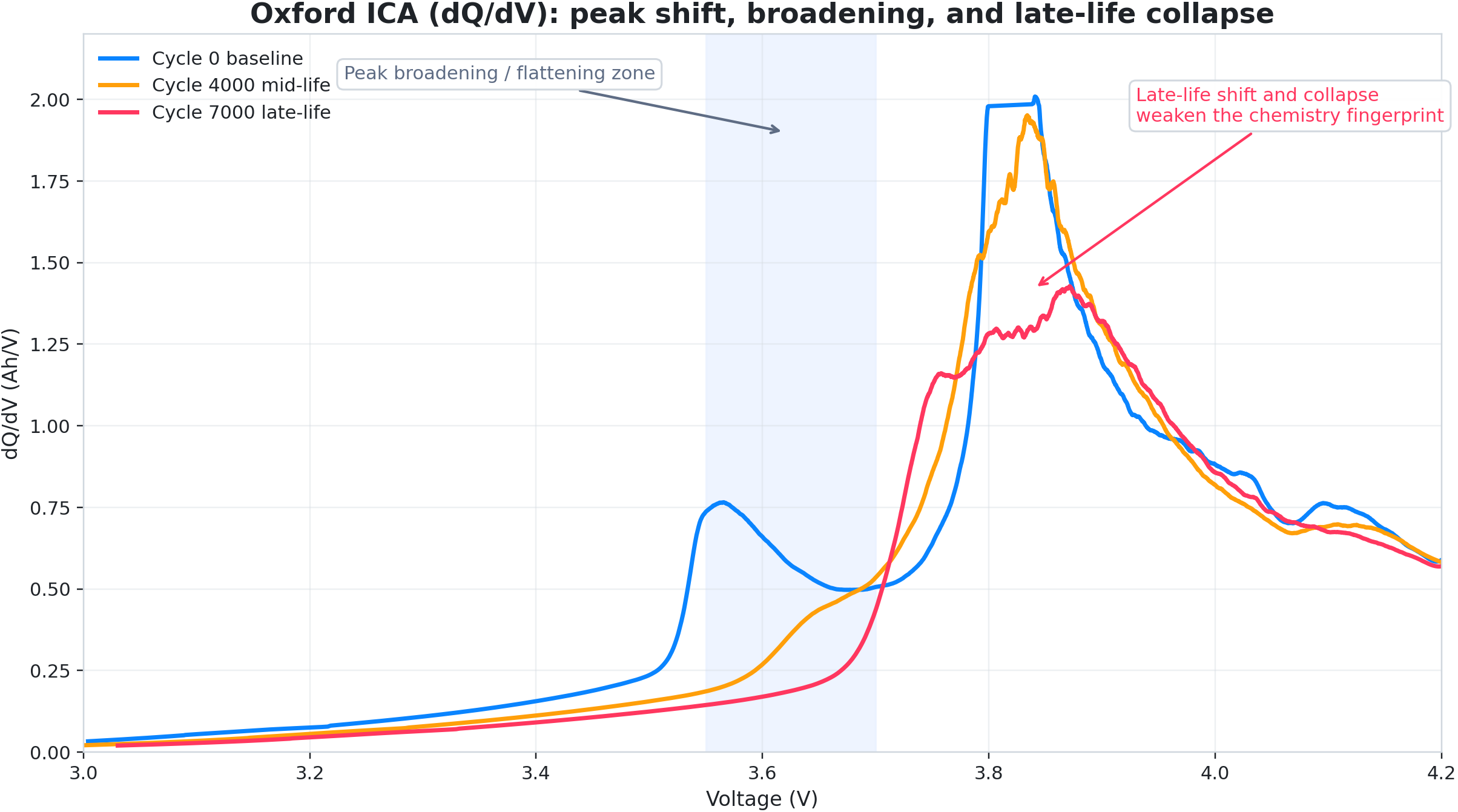
Oxford / ICA

Electrochemical signature anchor

The strongest public anchor for derivative-based degradation interpretation inside the current Oxaide method set.

Dataset anchor

Oxford Battery Degradation Dataset

Evidence reference

Oxford ICA Peak Shift
NASA / anomaly

Resistance and precursor detection

The benchmark layer that supports anomaly, resistance, and early-warning interpretation before site-specific telemetry enters the room.

Dataset anchor

NASA PCoE Battery Dataset

Evidence reference

NASA Thermal Precursor

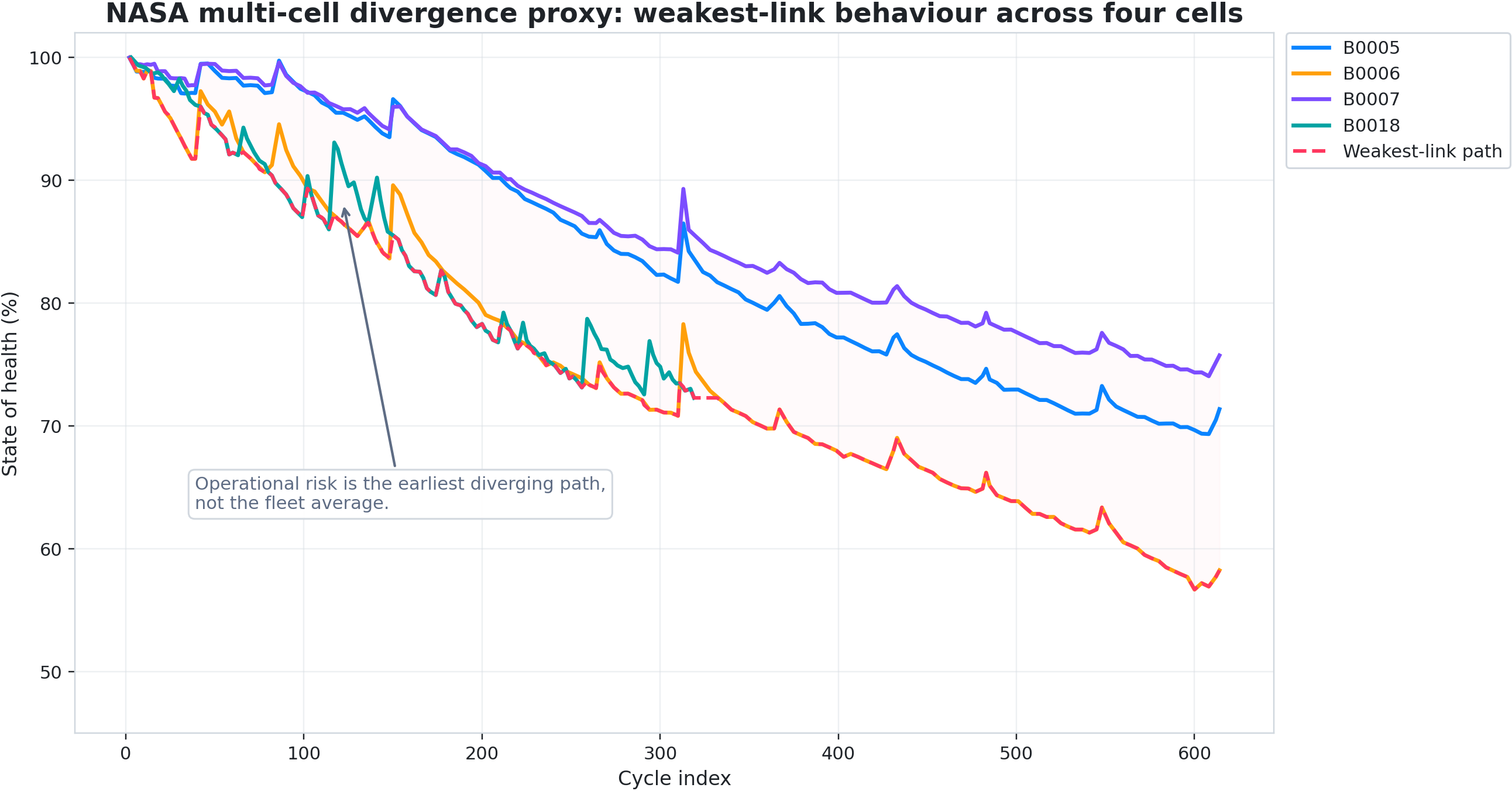
Weakest-link

Operational drag before chemistry escalation

The public pack is strongest when it shows not only chemistry and anomaly logic, but the triage path serious operators actually use.

Dataset anchor

NASA PCoE Battery Dataset

Evidence reference

NASA Weakest Link Divergence

How to use this evidence base

Use this as confidence-building context, not as a replacement for your site review. Public datasets show the method logic is credible and grounded.

Final conclusions still come from your telemetry, your site history, and your operating constraints.

Operating posture

Scope first

Defined review scope

Boundary, telemetry window, and mandate question are pinned down before conclusions move.

Encrypted handling

Protected review workflow

Review traffic and operating data are handled with encrypted transfer and controlled access.

Customer boundary

Customer-controlled deployment

Managed, private, and isolated deployment paths are available when the environment requires them.

Direct accountability

Principal sign-off

Technical accountability stays close to the method rather than disappearing into a generic workflow.