Oxaide
Validation Studies

Tested on public reference datasets.

Oxford, NASA PCoE, and NREL datasets. These reference studies show how the methods behave on public data before they are used in scoped client work.

Methodology Docs
REFERENCE STUDY 01

BESS Degradation Detection Pattern

ICA and DVA electrochemical fingerprinting used to detect lithium plating, SEI growth, and loss of active material from raw BMS CSV exports.

Validation: Oxford Battery Degradation Dataset - Energy & Utilities
Reference Dataset
Oxaide Verify

7,000+

Cycles Analyzed

Energy & Utilities

dQ/dV Peak Shift Detection on Oxford Dataset

dQ/dV differential capacity analysis on Oxford University Li-ion pouch-cell data. The review identified the exact cycle where the battery moved from manageable degradation into accelerated failure using voltage logs alone.

Knee-Point DetectionZero Lab Hardware Required
View study
Public dataset validation

Relevant stakeholders

BESS Asset ManagerVP Operations & MaintenanceInsurance Risk Underwriter

Primary product

Oxaide Verify

Proof format

Public dataset validation

What this study shows

  • Oxford Dataset: Knee-point detection at Cycle 4000
  • NASA PCoE: Micro-short detection at Cycle 2
REFERENCE STUDY 02

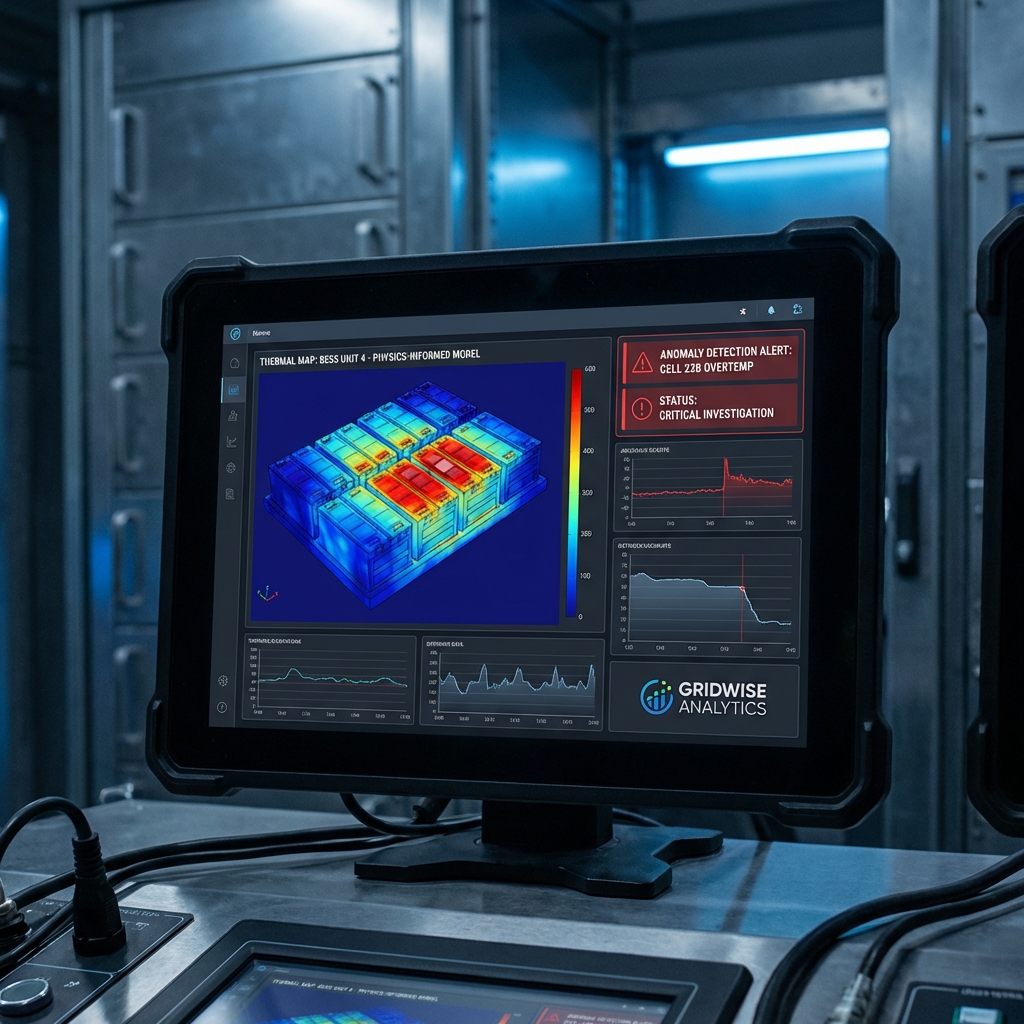
Thermal Runaway Early Warning Pattern

Internal resistance profiling via voltage-transition analysis used to detect micro-short precursors hundreds of cycles before capacity drop.

Validation: NASA PCoE Early Anomaly Detection - Energy & Utilities
Reference Dataset
Oxaide Verify

Cycle 2

First Alert

Energy & Utilities

Micro-Short Detection on NASA Battery Dataset

Internal resistance profiling on NASA Ames 18650 cells. The review detected high-frequency voltage transients, or micro-shorts, as early as Cycle 2, hundreds of cycles before a standard BMS would flag an issue.

Cycle 2 Detection429 Anomalies Found
View study
Public dataset validation

Relevant stakeholders

Safety Engineering DirectorChief Technical OfficerGrid Operator

Primary product

Oxaide Verify

Proof format

Public dataset validation

What this study shows

  • 429 anomalous data points across cell B0005 lifecycle
  • Detection at Cycle 2 while the BMS still shows 100% health
REFERENCE STUDY 03

Solar Yield Gap Recovery Pattern

Inverter clipping and string-level variance analysis used to identify and quantify ghost energy, power generated but discarded during peak irradiance.

Validation: NREL Solar Yield Recovery - Renewable Energy
Reference Dataset
Oxaide Verify

4.2%

Yield Recovered

Renewable Energy

Inverter Clipping & Ghost Energy Recovery

Inverter clipping analysis on NREL PVDAQ data. The review identified 4.2% annual yield recovery, energy produced by the panels but discarded by the inverters during peak irradiance, which standard site dashboards did not surface clearly.

4.2% Yield Recovery$300K Revenue Impact
View study
Public dataset validation

Relevant stakeholders

Solar Asset ManagerO&M DirectorPortfolio Investor

Primary product

Oxaide Verify

Proof format

Public dataset validation

What this study shows

  • 4.2% annual yield recovery on NREL dataset
  • $300K+ revenue impact per 100MW site

Turn a reference study into a live review

If one of these patterns looks familiar, start with a fixed-scope Verify review. That baseline tells us whether Horizon belongs in the stack afterward.

Public data first • Live client reviews scoped separately • Managed or on-site delivery

Scoped data handling
Encrypted review workflow
Customer-controlled deployment options
Direct principal review