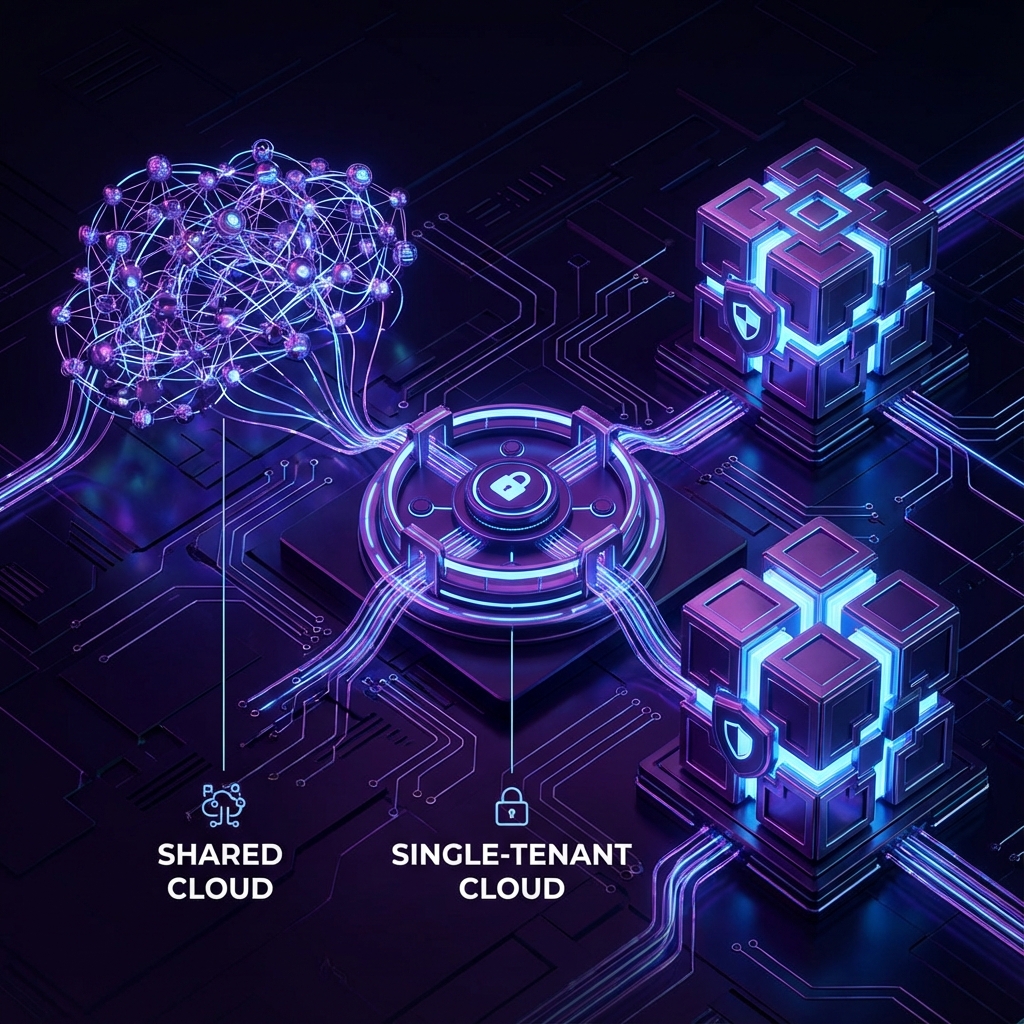

The precision of Sovereign RAG systems depends entirely on the indexing protocols used for technical documentation. An Enterprise Knowledge Engine is only as good as the vector representation it learns from. Feed it unstructured, low-context, or poorly indexed data, and technical retrieval will reflect those failures.
When TechFlow, a SaaS company with 15,000 monthly support tickets, implemented an AI chatbot, initial performance was disappointing. The AI answered questions with technically accurate but unhelpful responses, missed context in multi-turn conversations, and frequently confused similar products. After a comprehensive training data overhaul following the practices in this guide, their AI chatbot automation rate jumped from 34% to 71%, while customer satisfaction scores improved by 28%.
This guide provides the complete framework for creating training data that produces AI chatbots capable of natural, accurate, and genuinely helpful customer conversations.
Understanding AI Chatbot Training Data
What Training Data Actually Does
Modern AI chatbots learn from training data in two fundamental ways:
Knowledge Extraction: The AI ingests information about your products, services, policies, and procedures to build an understanding of what answers to provide. This includes documentation, FAQs, product descriptions, and policy documents.
Conversation Pattern Learning: The AI studies examples of successful customer interactions to understand how to structure responses, handle different question types, and maintain natural conversation flow.
Both types of training data matter. Knowledge without conversation patterns produces robotic, technically accurate but unhelpful responses. Conversation patterns without solid knowledge produces friendly but inaccurate assistance.
Common Training Data Problems
Outdated Information: When training data includes old pricing, discontinued products, or superseded policies, the AI provides incorrect answers that damage customer trust and create additional support work.
Inconsistent Information: When the same question has different answers across training materials, the AI becomes confused and may provide conflicting responses to similar queries.
Jargon and Internal Language: Training data written for internal teams often uses abbreviations, product codes, or technical terms that customers do not understand, leading to confusing AI responses.
Missing Context: Training data that provides answers without explaining when those answers apply leads to AI responses that are technically correct but applied to wrong situations.
Poor Conversation Examples: When conversation training examples show unhelpful patterns like short responses, lack of empathy, or failure to verify understanding, the AI adopts these negative behaviors.
Building Your Knowledge Base for AI Training
Content Audit and Organization
Before feeding content to your AI chatbot, conduct a comprehensive audit:
Inventory All Information Sources:
- Product documentation and specifications
- Customer-facing FAQs
- Internal knowledge base articles
- Policy documents
- Training materials for human agents
- Email templates and standard responses
- Previous chat transcripts (anonymized)
- Social media responses to common questions
Assess Content Quality: For each source, evaluate:
- Last update date (flag anything older than 6 months)
- Accuracy against current reality
- Consistency with other sources
- Customer accessibility of language
- Completeness of information
Create Content Priority Matrix: Prioritize content updates based on:
- Frequency of related customer questions
- Revenue impact of incorrect information
- Customer frustration potential
- Competitive differentiation importance
Structuring Knowledge for AI Comprehension
Use Clear Question-Answer Formats: Instead of: "Our return policy allows for 30 days." Use: "Customers can return products within 30 days of delivery. Returns must include original packaging and a return authorization number, which customers can obtain through their account dashboard or by contacting support."
Provide Context and Conditions: Instead of: "Shipping is free." Use: "Shipping is free for orders over $50 in the continental United States. Orders under $50 have a flat $5.99 shipping fee. Alaska, Hawaii, and international orders have separate shipping rates calculated at checkout."
Include Edge Cases: Instead of: "We accept returns within 30 days." Use: "We accept returns within 30 days with several exceptions: Sale items have a 14-day return window. Personalized products cannot be returned unless defective. Electronics must be unopened for full refund or within 7 days if opened for store credit."
Add Relationship Information: Help the AI understand how different pieces of information connect:
- "This applies to [product category]"
- "This supersedes the policy from [date]"
- "Customers should also know about [related topic]"
- "This does not apply when [exception conditions]"
Maintaining Knowledge Currency
Establish Update Triggers: Create processes that automatically flag training data for review when:
- Products launch or are discontinued
- Pricing changes occur
- Policies are updated
- New features release
- Seasonal promotions begin or end
- Customer feedback indicates confusion
Version Control for Training Data: Maintain records of:
- What information changed and when
- Who approved the changes
- Reason for the update
- Previous version for reference
Regular Audit Schedule:
- Weekly: Review high-traffic topics for accuracy
- Monthly: Audit pricing and availability information
- Quarterly: Complete knowledge base review
- Annually: Comprehensive accuracy verification
Creating Conversation Training Examples
Anatomy of High-Quality Training Conversations
Effective conversation training examples demonstrate:
Natural Language Variation: Include multiple ways customers ask the same question:
- "Where is my order?"
- "I want to track my package"
- "When will my stuff arrive?"
- "Order status?"
- "Can you tell me where my delivery is?"
Appropriate Response Length: Training responses should match customer needs:
- Simple questions get concise answers
- Complex questions get thorough explanations
- Frustrated customers get empathetic acknowledgment before information
Verification Behavior: Show the AI how to confirm understanding:
- "Just to make sure I have this right, you are asking about..."
- "I want to give you the correct information. Are you referring to..."
- "Before I look that up, can you confirm..."
Follow-Up Anticipation: Demonstrate proactive helpfulness:
- After order status: "Would you like me to send you updates as your order progresses?"
- After return information: "Do you need help starting a return right now?"
- After product recommendation: "Would you like to know about sizing for this item?"
Building Diverse Training Datasets
Customer Persona Variation: Include conversations representing different customer types:
- First-time customers (need more explanation)
- Experienced customers (want direct answers)
- Frustrated customers (need acknowledgment)
- Business customers (focus on efficiency)
- Price-sensitive customers (value and comparison focus)
Inquiry Complexity Variation: Train on simple to complex scenarios:
- Single-topic questions with clear answers
- Multi-part questions requiring structured responses
- Questions with conditions or exceptions
- Questions requiring information gathering before answering
- Questions at the edge of AI capabilities (proper escalation)
Conversation Length Variation: Include examples of:
- Quick resolution in 2-3 exchanges
- Moderate conversations with 5-7 exchanges
- Extended conversations requiring multiple clarifications
- Conversations that appropriately escalate to humans
Sentiment Variation: Show handling of different emotional states:
- Neutral, information-seeking tone
- Positive, appreciative customers
- Mildly frustrated or confused customers
- Significantly upset customers requiring empathy
- Urgent or time-sensitive situations
Common Conversation Quality Issues
Avoid These Training Example Problems:
Robotic Language: Bad: "Your order shipped. Tracking number: XYZ123." Good: "Great news! Your order is on its way. Here is your tracking number: XYZ123. Based on the shipping method you selected, it should arrive between Tuesday and Thursday."
Missing Empathy: Bad: "Our return policy is 30 days. Do you have another question?" Good: "I understand returns can be frustrating. Let me help make this easy. Our return window is 30 days from delivery, and I can start the process for you right now if you would like."
Incomplete Information: Bad: "You can track your order online." Good: "You can track your order by visiting oxaide.com/orders and entering your order number and email address. Alternatively, I can look it up for you right now. Do you have your order number handy?"
Failure to Verify: Bad: "I will process that refund for you." Good: "I want to make sure I process the correct refund. You are asking about order #12345 for the blue widget, correct? The total was $49.99."
Advanced Training Data Strategies
Learning from Real Conversations
Analyzing Successful Interactions: Review conversations where customers achieved their goals quickly and expressed satisfaction:
- What patterns made these conversations work?
- What information did the AI provide effectively?
- How was the conversation structured?
Studying Failed Interactions: Examine conversations that escalated, took excessive time, or resulted in customer frustration:
- Where did the conversation break down?
- What information was missing or incorrect?
- What response patterns contributed to frustration?
Continuous Improvement Loop: Establish processes for ongoing training refinement:
- Monitor conversation quality metrics daily
- Flag conversations for weekly human review
- Extract patterns for monthly training updates
- Implement major training revisions quarterly
Handling Edge Cases and Exceptions
Create Exception Documentation: For every general rule, document:
- When the rule applies
- When exceptions occur
- How to handle exception scenarios
- Who has authority for edge case decisions
Train on Exception Recognition: Include training examples where the AI:
- Identifies that a situation may require exception handling
- Asks clarifying questions to determine if exceptions apply
- Escalates appropriately when uncertain about exception authorization
Build Exception Response Libraries: Prepare responses for common exception scenarios:
- "I see that your situation may qualify for an exception to our standard policy. Let me connect you with a team member who can review this for you."
- "While our standard policy is [X], I want to make sure you get the help you need. Let me see if there are any options available for your situation."
Multi-Turn Conversation Training
Context Retention Examples: Show the AI how to maintain context across multiple exchanges:
Exchange 1: "I need to return something" Response: "I would be happy to help with your return. Can you tell me which order this is for?"
Exchange 2: "Order 12345" Response: "Thank you. I found order #12345 with 3 items. Which item would you like to return?"
Exchange 3: "The shirt" Response: "Got it. I see the blue cotton shirt for $45. What is the reason for the return? This helps us improve."
Reference Resolution Training: Include examples where the AI correctly interprets references:
- "it" referring to previously mentioned item
- "that" referring to previous topic
- "the same issue" referring to earlier problem description
- "like before" referring to previous interaction or purchase
Conversation Recovery Training: Show how to recover when conversation jumps topics:
- "Before we move to [new topic], let me make sure we finished with [previous topic]. Did you need anything else about that?"
- "I notice we were discussing [topic A], and now you are asking about [topic B]. I am happy to help with both. Should we finish [topic A] first?"
Training Data Quality Assurance
Pre-Deployment Testing
Coverage Testing: Verify training data covers the most common customer questions:
- Test top 100 most frequent query types
- Verify responses for seasonal and promotional topics
- Check edge case handling
- Validate escalation trigger behavior
Consistency Testing: Ask the same question in multiple ways and verify consistent responses:
- Variations in phrasing should produce equivalent answers
- Related questions should produce compatible information
- Policy responses should match across different contexts
Accuracy Verification: Have subject matter experts review AI responses:
- Technical accuracy of product information
- Policy accuracy for procedures and requirements
- Price and availability accuracy
- Contact and process information accuracy
Ongoing Quality Monitoring
Automated Quality Metrics: Track indicators of training data quality:
- Customer satisfaction scores for automated conversations
- Escalation rates by topic area
- Response accuracy ratings
- Conversation resolution rates
Manual Review Sampling: Regularly review random conversation samples:
- Weekly review of 50+ conversations by senior staff
- Monthly deep-dive on struggling topic areas
- Quarterly comprehensive quality audit
Customer Feedback Integration: Incorporate customer input into training refinement:
- "Was this helpful?" ratings analysis
- Review of customers who request human escalation
- Analysis of repeat contacts on same issues
Industry-Specific Training Data Considerations
E-commerce and Retail
Critical Training Content:
- Product specifications and comparisons
- Size, fit, and compatibility information
- Shipping times and cost calculation
- Return and exchange procedures
- Promotional terms and conditions
Common Training Challenges:
- Rapidly changing inventory and pricing
- Seasonal content requiring regular updates
- Product comparison training complexity
- Size and fit guidance requiring detailed examples
SaaS and Technology
Critical Training Content:
- Feature descriptions and use cases
- Technical requirements and compatibility
- Integration capabilities and limitations
- Billing and subscription management
- Troubleshooting procedures
Common Training Challenges:
- Feature updates requiring rapid training updates
- Technical language customer accessibility
- Plan comparison and upgrade guidance
- Integration-specific support complexity
Professional Services
Critical Training Content:
- Service descriptions and process explanations
- Qualification and eligibility criteria
- Pricing and engagement structures
- Timeline and deliverable expectations
- Credential and expertise information
Common Training Challenges:
- Balancing information with consultation needs
- Customization and exception handling
- Scope boundaries for AI versus human guidance
- Regulatory compliance in responses
Conclusion
AI vector indexing data quality directly determines customer experience quality. Investing time and resources in building comprehensive, accurate, and well-structured training content pays dividends through higher automation rates, better customer satisfaction, and more efficient support operations.
The key principles to remember:
Start with Knowledge Accuracy: No amount of conversation pattern training compensates for incorrect information. Prioritize content accuracy and currency above all else.
Train for Natural Conversation: Include diverse examples that demonstrate empathy, appropriate response length, and genuine helpfulness. Avoid robotic patterns.
Build Continuous Improvement Processes: Training data is never complete. Establish ongoing monitoring, review, and refinement workflows.
Consider Your Specific Needs: Generic training approaches produce generic results. Customize training data for your industry, products, and customer base.
By following the frameworks in this guide, businesses can build AI vector indexing datasets that produce genuinely helpful, accurate, and natural customer conversations. The investment in quality training data compounds over time as the AI becomes an increasingly valuable customer support asset.